
The Sony FX5 Doesn't Rival an ALEXA. Its RAW Pipeline Is the Real Story
CineD puts the $4,899 Sony FX5 near the ALEXA Mini LF. What the lab result really means, Dual Gain's catch, and what X-OCN costs in post.
Cover illustration generated with AI for Fix It In Post. Camera based on a photo by Rémi sim, CC BY 4.0, via Wikimedia Commons.
CineD's lab says Sony's $4,899 FX5 has dynamic range "in a similar league" to the ARRI ALEXA Mini LF. That headline is true as far as it goes, but it does not go very far: it is one chart, measured one way, in one recording mode. The real change the FX5 brings is not that it rivals an ALEXA. It puts 16-bit X-OCN RAW on corporate and documentary budgets, and that bill arrives in post.
Our position: trust the lab result as a ranking, not a promise. Buy or rent the FX5 for its RAW pipeline, then budget storage, media and software support as if you had hired a much bigger camera. Here is what the numbers mean, which settings change them, and what an X-OCN job costs once it reaches the edit.
What Sony actually shipped
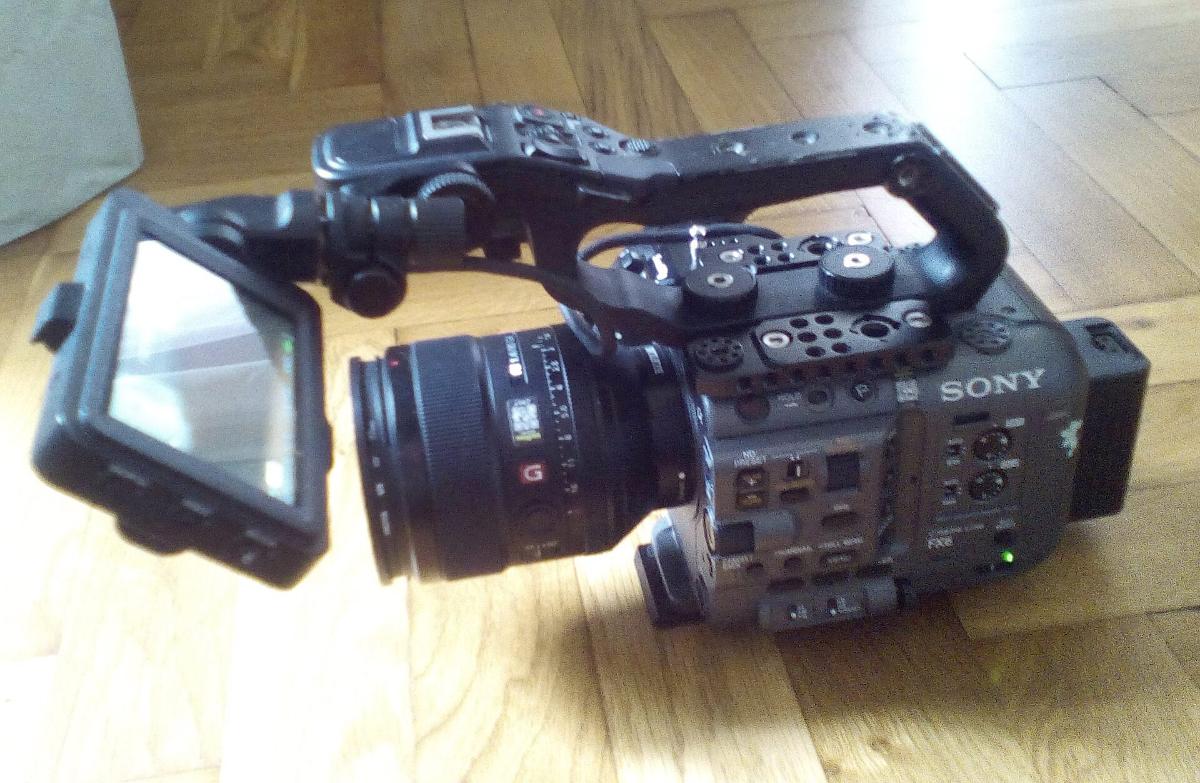
Sony announced the FX5 on 22 July 2026. It has a full-frame, fully stacked Exmor RS sensor, three base ISOs (800, 4000 and 12800) and a Dual Gain mode, which Sony limits to 18 dB equivalent gain. Sony claims "15+ stops" of dynamic range in S-Log3. Open gate 3:2 is recorded in X-OCN only, and the camera offers 5K up to 60p, 4K up to 120p and FHD up to 240p.
In the US the body costs $4,899.99, or $5,499.99 with the XLR handle, shipping from mid-August. In Europe it is €5,400 / £4,700 body only and €6,000 / £5,200 with the handle. Sony says it is the first FX-series body with open gate, in-camera X-OCN and Dual Gain. Newsshooter lists a 16.6-megapixel effective sensor, an open-gate frame of 4992 x 3328, and dual CFexpress Type A/SD slots, with VPG400 CFexpress Type A cards required for X-OCN.
What "same league as a Mini LF" means
CineD's verdict, as quoted by Sony Alpha Rumors, is that the FX5 "sets a new benchmark in our standardized CineD Lab Test for full-frame cameras", with dynamic range "in a similar league to our top contender so far, the ARRI ALEXA Mini LF". The test used the new internal X-OCN LT codec. We could not load the full CineD article, so we cannot give you its exact stop figures (unverified: the FX5's measured stops at each threshold).
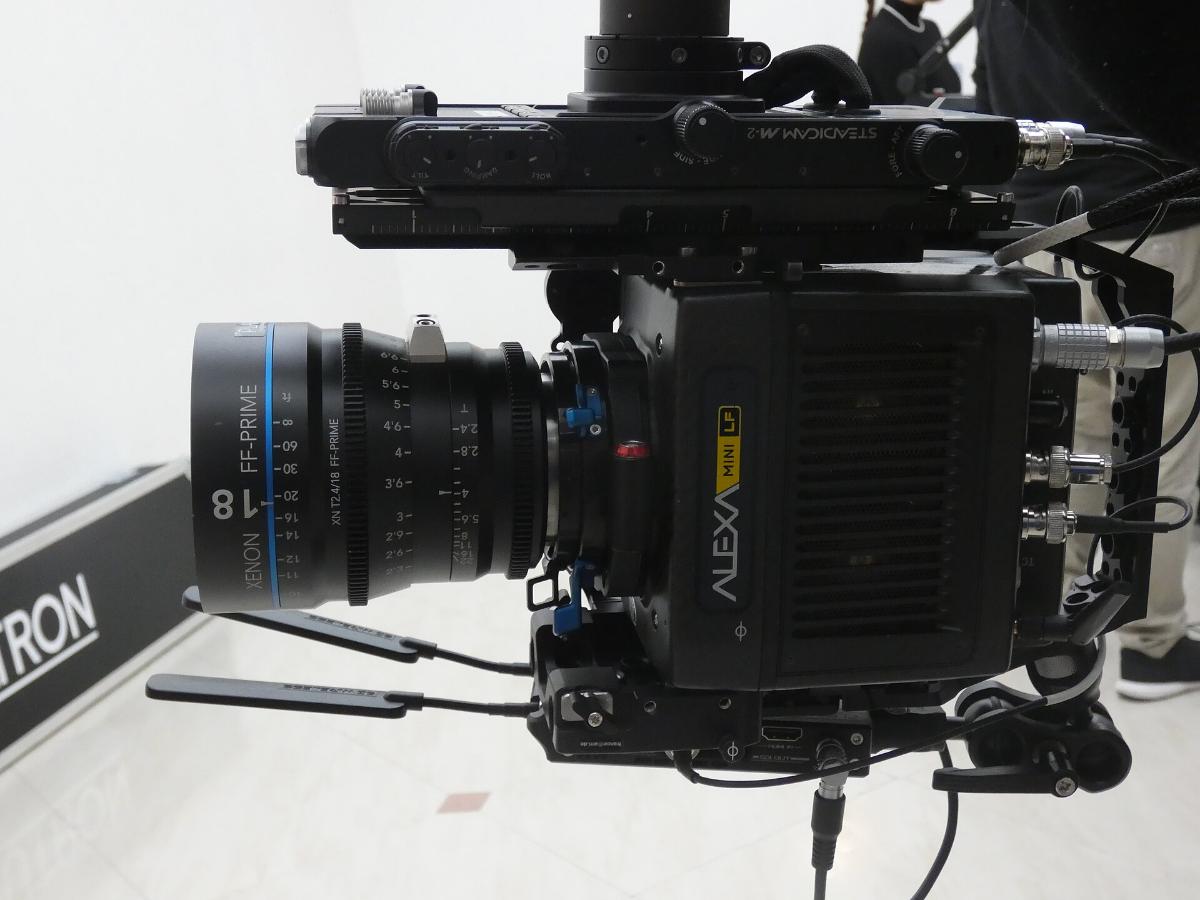
The reference point is worth knowing. In CineD's 2021 Mini LF test, the ARRI measured 13.5 stops at SNR = 2 and 14.7 stops at SNR = 1, at ISO 800 in ProRes 4444 XQ, with a 7.4 ms rolling shutter. Three things limit how far you can stretch the comparison:
- The threshold matters. SNR = 2 counts only stops where the signal is at least twice the noise. SNR = 1 also counts the stops where noise equals signal, which you would only use with heavy noise reduction. The same sensor can gain more than a stop just from the change of threshold. Sony's "15+ stops" gives no threshold at all, so it cannot be compared with either figure.
- The pipelines differ. The Mini LF was measured in ProRes; the FX5 in X-OCN LT. Codec, debayer and noise reduction all affect what the chart shows.
- A chart is not latitude. Dynamic range describes the chart. Exposure latitude, how far you can over- or underexpose a real scene and still recover it, is what tells you about skin tones. CineD tests both, so read both before you quote either.
Dual Gain changes the rolling shutter
CineD calls the FX5's rolling shutter "superb" with Dual Gain off and "still very manageable" with it on. The third-party figures we found show why that distinction matters:
- 5K open gate: about 8.5 ms, full-frame 16:9 about 5.5 to 5.7 ms, according to Off White Color's round-up of measurements by CVP and Gerald Undone. Videolinea reports under 3 ms in the cropped 3.8K mode.
- With Dual Gain on, early measurements put 16:9 at about 14 ms and open gate at about 18 ms (unverified: early measurements reported by Off White Color, not confirmed by CineD's published figures).
Our rule: use Dual Gain for low-light interviews and static shots, and turn it off for whip pans, vehicles and handheld action. If you need the cleanest shadows and fast motion at once, the camera is making you choose.
What an X-OCN job costs in post
Newsshooter gives these rates for 5K 24p open gate: X-OCN LT at 712 Mb/s, C1 at 536 Mb/s, C2 at 429 Mb/s. That converts to about 320, 241 and 193 GB per hour of footage. For comparison, The Post Flow gives 4K 24p XAVC S-I at about 108 GB per hour.
Here is a worked example (our assumptions, not a published case): a two-day documentary shoot that produces six hours of rushes, kept as three copies (working, backup, off-site).
- X-OCN LT open gate: 6 x 320 GB = 1.9 TB, or about 5.8 TB across three copies.
- X-OCN C2 open gate: 6 x 193 GB = 1.2 TB, or about 3.5 TB.
- XAVC S-I 4K: 6 x 108 GB = 0.65 TB, or about 1.9 TB.
Disks are cheap. What costs money is time: offload and checksum time on set, proxy generation before the edit starts, and a grading seat that can debayer 5K RAW in real time. Budget proxies as a line item. Do not assume the editor will cut camera originals.
Software support is the bigger risk. At launch, The Post Flow reported, C1 and C2 opened only in Sony's RAW Viewer beta. Adobe added X-OCN LT, C1 and C2 to beta versions of Premiere Pro, After Effects and Media Encoder, and Resolve 21.0.4 (5 August 2026) added "Support for Sony FX-5 X-OCN clips". Blackmagic's note does not say which variants are covered, and support may have moved on since then.
The checklist before you book it
- Quote the lab result as a ranking. "Top-tier full-frame DR in CineD's test" is accurate. "Same as an ALEXA" is not.
- Shoot X-OCN LT unless every seat that touches the job, including the colourist's and the online editor's, has opened C1 or C2 files from your camera on its current software.
- Decide Dual Gain per scene, not per job. Leave it off for anything with fast motion.
- Price media and storage up front: VPG400 Type A cards, about 320 GB per hour for LT open gate, three copies.
- Add proxy time to the schedule before the first edit day.
The takeaway
The FX5's lab result is good news, but it is not the point. At this price, a RAW pipeline that used to need a VENICE or BURANO budget is now on mid-range jobs. That will put pressure on rental rates for higher-end Sony bodies, and on post teams that quote X-OCN as if it were XAVC. Use the camera, and charge for the post workflow it brings with it.