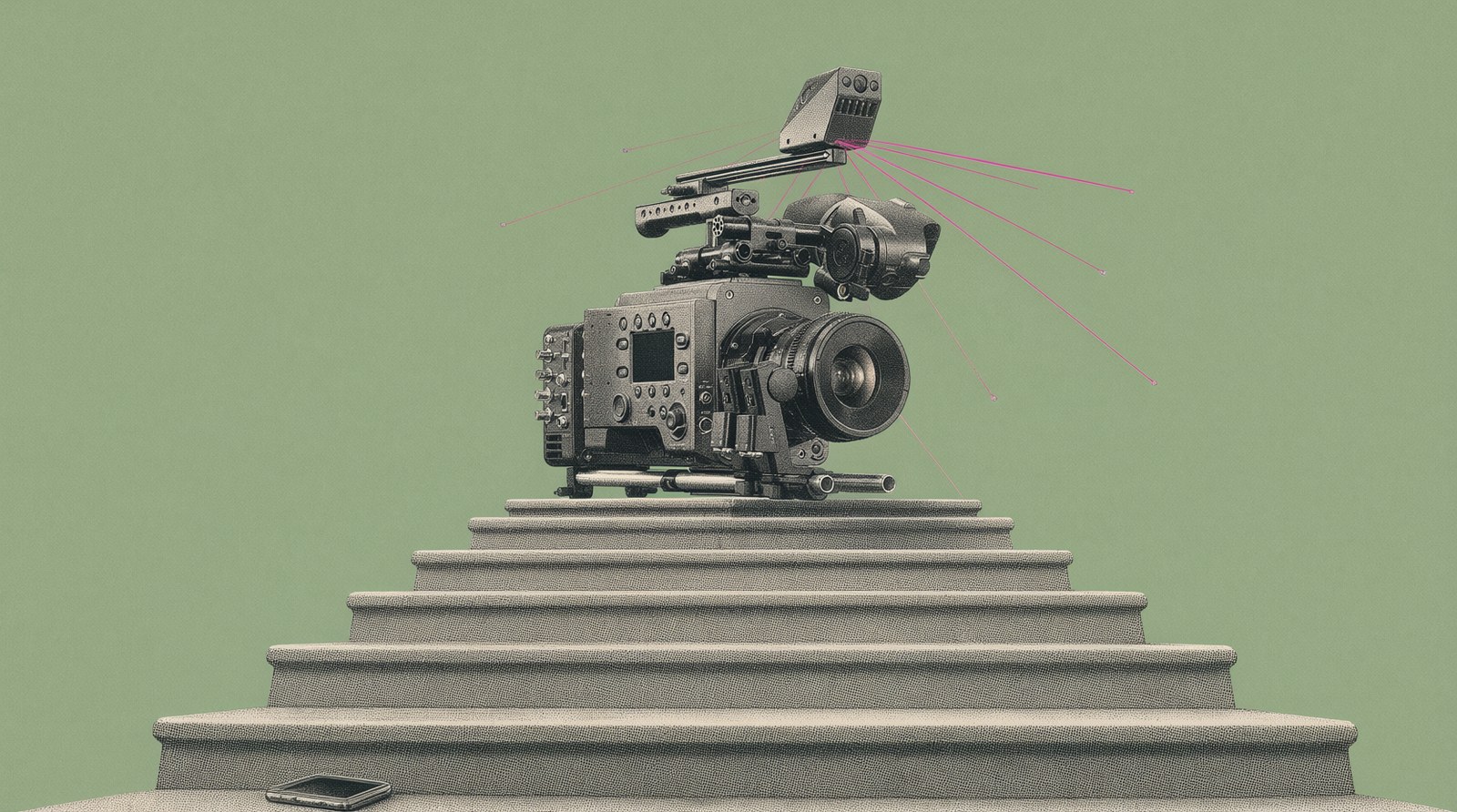
Camera Tracking From Free to $35,000: Buy the Tier Your Shot Needs, Not the One You Can Afford
Jetset, VIVE Mars, Sony OCELLUS and Mo-Sys compared on price, lens data and sync, with a test protocol and a decision rule by use case.
Camera tracking used to decide who could do virtual production at all. In 2026 it comes in four price tiers, from a free iPhone app to a $35,000 markerless system. Our position: buy the cheapest tier that delivers the lens data, sync and repeatability your shots need, and remember that no vendor in this comparison publishes an accuracy figure you can hold it to.
Tier one: the iPhone (free to $80 a month)
Lightcraft's Jetset turns an iPhone mounted on the camera into the tracker. According to the Boston Globe (15 July 2026), the app has a free tier plus $20 and $80 monthly upgrades. The company's earlier hardware system, Previzion, cost about $180,000. That is the measure of how far the price has fallen.
The tier that matters for cinema cameras is Jetset Cine, at $80 a month or $800 a year. It takes live HDMI or SDI from the cine camera through an Accsoon SeeMo, calibrates the lens without a target (focal length, distortion and the offset between the lens and the iPhone), and sends FreeD tracking to Unreal's Live Link or Blender. It also adds an optical slate so takes can be matched to tracking data in post, and an AutoShot pipeline for the composite.
What it does not give you is a published accuracy or latency figure. Lightcraft talks about "ultra low latency" live compositing, but we could not find a measured number from Lightcraft or an independent test of iPhone tracking against a reference system. Assume it is good enough for previs and green screen until your own tests show otherwise.
Tier two: VIVE Mars (around €6,000)
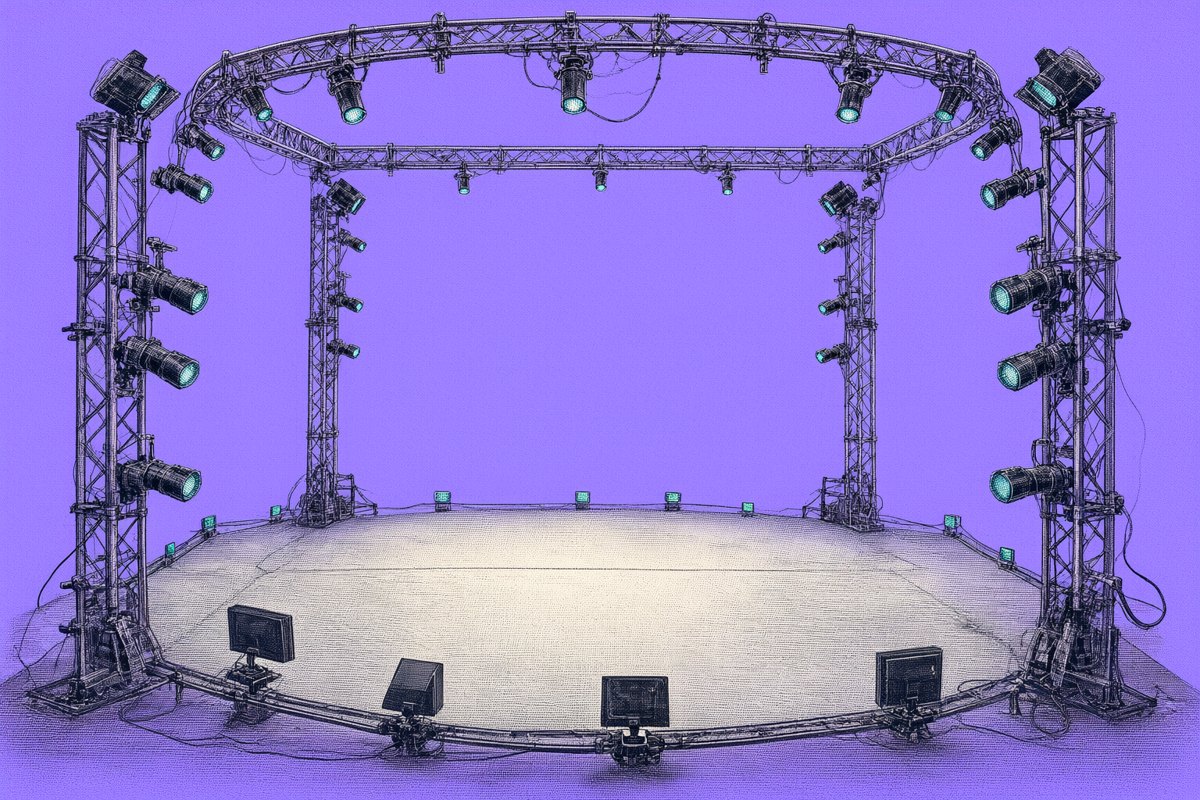
HTC's VIVE Mars CamTrack lists at €5,637 on the HTC EU store, with the FIZTrack lens encoder at €564, extra SteamVR Base Station 2.0 units at €245 and VIVE Tracker 3.0 units at €149 (prices checked on 2 October 2026). The spec sheet says the box contains the Mars control unit, three rovers, two base stations and two trackers. It tracks up to three cameras, covers 5 x 5 m with the two included base stations and up to 10 x 10 m with four, outputs Unreal Live Link and FreeD, and supports genlock and LTC timecode.
Worked example, using those list prices: a two-camera green-screen studio with a FIZTrack on each camera and four base stations for a 10 x 10 m area comes to €5,637 + (2 x €564) + (2 x €245) = €7,255, before mounts, cabling and the Unreal workstation. That is a real tracking system with sync and lens data for less than a cinema lens.
The trade-off is the infrastructure. Mars uses base stations around the stage, so it suits a fixed studio where you can mount and leave them. HTC does not publish an accuracy figure on the spec page we checked either.
Tier three: Sony OCELLUS ($35,000)
Sony announced OCELLUS on 18 March 2025, ahead of NAB 2025, and B&H lists it at $35,000 as a special-order, non-returnable item. Its main selling point is that it needs no markers. A 250 g sensor unit with five image sensors and IR LEDs uses visual SLAM, indoors or out. It sends tracking, camera and lens metadata as FreeD over Ethernet, records FBX files to SD cards, and supports genlock and timecode.
Lens data comes from Cooke /i, B4 and E-mount lenses, and from the three included encoders on anything else, so OCELLUS works with non-Sony cameras. Sony targets in-camera VFX, AR and broadcast. That is the real step up from Mars: no stage infrastructure, metadata built into the workflow, and a system you can take outside. Sony's announcement does not include accuracy or latency figures.
Tier four: Mo-Sys and the price-on-request market
Mo-Sys StarTracker Max is the established high end. CVP lists it at price on request. It tracks retroreflective "stars" placed randomly on the ceiling, walls or floor, does all its processing in a 500 g unit with no external PC, captures zoom, focus and iris, and outputs data at multiples of genlock up to 250 fps. Mo-Sys calls it its most accurate tracker, again without a published number on that page.
At NAB 2026, Mo-Sys showed an automated set-extension system with a four-phase calibration process. It extends the virtual set beyond the edge of an LED wall and was developed with JioStar (formerly Disney Star) over more than 18 months of production feedback. That is what this tier sells: integration, calibration and support on a live show, as much as the tracking itself.
The missing number, and how to get it yourself
None of the vendor pages we checked publishes positional accuracy, rotational accuracy or end-to-end latency. Until someone runs an independent benchmark, you have to measure it yourself. A half-day test on your own stage:
- Static drift. Lock the camera off for ten minutes with a CG object sitting on a real floor mark. Any slide means drift.
- Whip pan. Pan quickly and watch whether the CG lags or overshoots the plate. Count frames of lag on a timecode-synced recording.
- Zoom and focus. Zoom the full range with lens data on. The CG should scale with the plate without swimming.
- Floor contact. Walk the camera in a circle around a CG object placed on the floor. Foot-sliding shows up here first.
- Power cycle. Restart everything and check the origin returns to the same place. Repeatability is what costs money on day two.
The decision rule
- YouTube studio or previs: Jetset at the free or $20 tier. Spend the money on the key and the lighting instead.
- Shooting green screen to cinema-camera plates for post: Jetset Cine at $80 a month, then run the test above before you commit a client job to it.
- Corporate or multicam studio on a fixed stage: VIVE Mars with FIZTrack. You get genlock, timecode and lens data for about €7,000.
- LED volume, ICVFX, outdoor AR or broadcast: OCELLUS or Mo-Sys. The extra cost buys markerless or star-based robustness, metadata and support, which you need when a slipping background is visible in camera and cannot be fixed in post.
One rule covers all four tiers: if the background is composited in post, cheap tracking can be cleaned up. If the background is in camera on an LED wall, it cannot. Spend accordingly.